
Grants report · 04 March 2026
The winter we paid out 142 small fuel grants — and where they went.
From the trustees of Arnold Relief in Need · · 8 min read
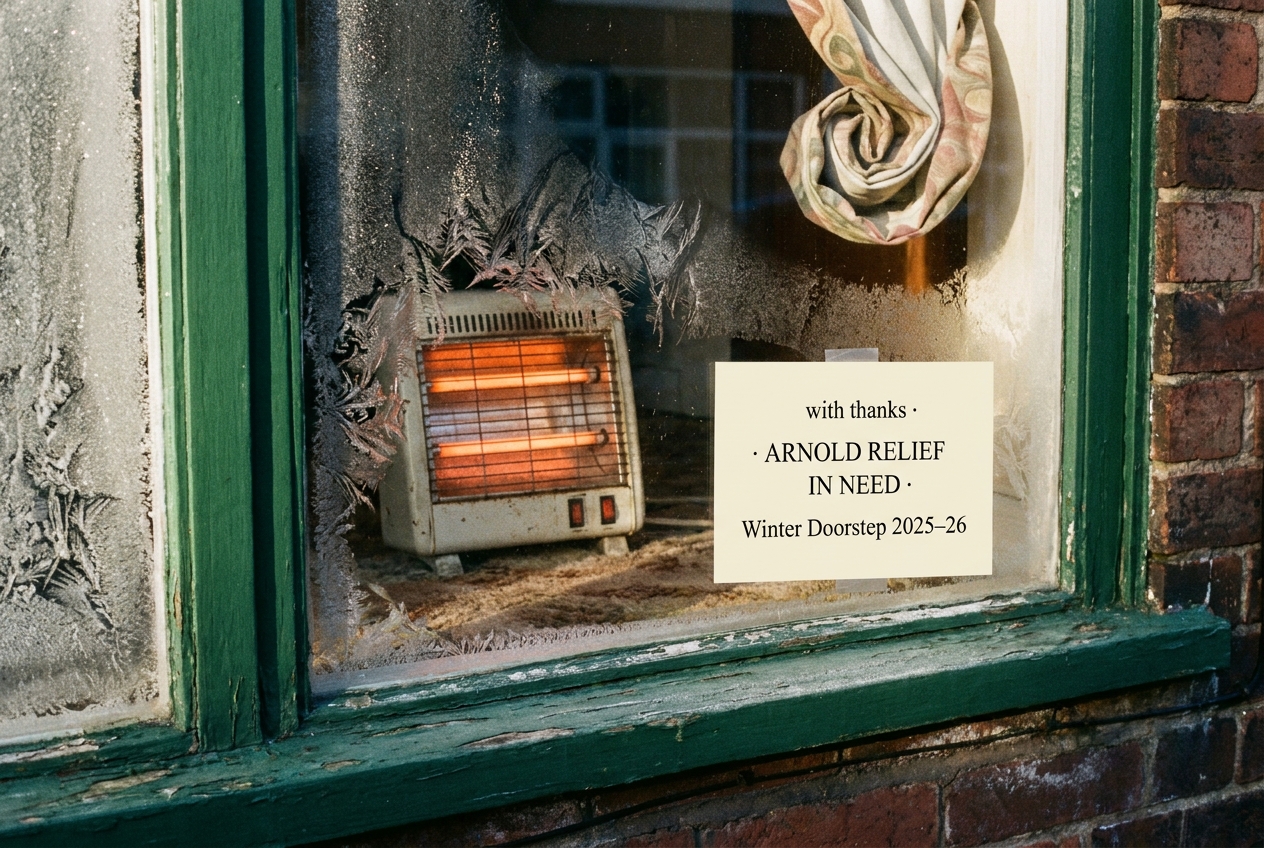
Between the first frost of November 2025 and the spring thaw of late February 2026, the trust paid out 142 small fuel hardship grants across the ancient parish of Arnold. The total of those grants was £12,070. The median grant was £85, and the largest single grant was £200, paid to a four-person household in Killisick whose meter had been on emergency credit for three weeks. This short report is the trustees' attempt to give a plain account of the round.
It is not a glossy impact report. We do not run those. What follows is what we have, in plain numbers, with the small notes the chair scribbled in the margin of the minute book.
The shape of the round.
Of the 142 grants made, 116 were paid as a folded letter and a paper grocer's voucher delivered to the door. The remaining 26 were paid directly to an energy supplier or onto a key meter, on the household's preference. The median time from referral to delivered grant was four working days. The longest gap — eight working days — was in the Christmas week, when our two winter caseworkers were both on the road for Wassail.
The grants were not, generally, the first place the household had been. By our caseworkers' notes, 78 of the households had also been signposted to the Citizens Advice debt helpline, 42 to the Gedling Borough Council welfare team, and 18 to the local food larder before the trust was approached. We are happy with this — the trust does not exist to be the first stop. We exist to plug a small hole between systems.
Where the grants landed.
The 142 grants were distributed across the parish, broadly, in proportion to population — with the small qualification that Daybrook and Killisick, two of the wards with the older private-rented housing stock, were disproportionately represented this winter. The trustees suspect this is largely a function of the heating systems in that stock.
- Daybrook · 37 grants · £3,140
- Killisick · 31 grants · £2,640
- Woodthorpe · 26 grants · £2,210
- Redhill · 20 grants · £1,700
- Front Street & St Mary's · 17 grants · £1,440
- Bestwood Village · 11 grants · £940
'They never made me say it twice. They never made me say it loudly. That mattered, I think more than the money did.'
— Bryan, 66, Redhill, on a grant of £160 in mid-January.
Who referred the cases.
The 142 grants came in via five referral channels, in roughly the following proportions. Most cases — well over half — came in through the Gedling Borough Council welfare team, who hold the closest thing the parish has to a single welfare register. The remaining quarter or so came in by quieter routes — through a parish welfare worker, a school welfare lead, a district nurse, or a churchwarden who had been to a Sunday Doors door and noticed something.
- Gedling Borough Council welfare · 78 referrals
- Parish welfare workers · 22 referrals
- Arnold Hill / Redhill academy welfare teams · 18 referrals
- Daybrook Surgery district nurses · 14 referrals
- Parish workers and Sunday Doors befrienders · 10 referrals
What the grants paid for.
When we ring a household to confirm the grant is on its way, the caseworker asks the household what the grant will mean. The answer is almost always one of three things: the heating staying on through the rest of the month; a meter top-up; or a small grocery shop the household had not been planning to make. The grant is, deliberately, not earmarked — it is intended as a small piece of relief on the household's terms, not as a coupon for one specified use.
We do, in passing, hear about other things. A grant has paid for a hot-water tank refilling, an electric blanket, a bus fare to a grandchild's school sports day, a daughter-in-law's weekly carer mileage, and (twice this winter) for a small bag of cat food. None of these were the official reason for the grant. All of them were, in their household's case, the reason the grant mattered.
What we will change for next winter.
The trustees met at Arnot Hill House on the third of March 2026 and looked at the round in the round. Three small things will change for the 2026–27 cycle.
One. We will print the household-facing leaflet, finally, on cream rather than white paper. Several households said the white paper made the grant letter look like a bill, and one or two said they had nearly thrown it in the recycling unread.
Two. We will widen the upper grant ceiling from £200 to £250, with the additional band reserved for households with four or more people. The four-person Killisick household this winter would have benefited from £30 more, on the caseworker's note.
Three. We will add a small post-grant note, a fortnight after delivery, to households who have given consent — a single sentence acknowledging that the grant has been received, no further questions. This was a suggestion from two of our long-standing referrers and we should have done it years ago.
A small thank-you.
The Winter Doorstep round runs on the back of three of our volunteers — two winter caseworkers and a chair who reads, every week, the case notes that come in by email and by post. Our thanks to all three of them, and to the parish workers who pointed us at every one of the 142 households.
The 2026–27 round opens on the third Saturday of November, as it has done since 1971. We will be glad to receive referrals from parish workers, school welfare leads, district nurses, churchwardens, and anyone else who knows a household in the parish for whom a small fuel grant would matter.
— The trustees of Arnold Relief in Need, signed at the quarterly meeting of 03 March 2026.